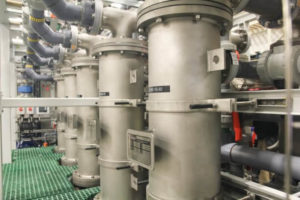
Economic Ceramic Ultrafiltration for Highly Impaired Water
This article introduces a new type of ceramic membrane system and explains how it opens the application range. An example of treatment of oil and grease in produced water is provided.
Dec 3rd 2019
Table 1. Comparison of Fluoride Removal Technologies
| Technology | Pros | Cons |
|---|---|---|
| CaF2 Precipitation & Coagulation (Conventional) |
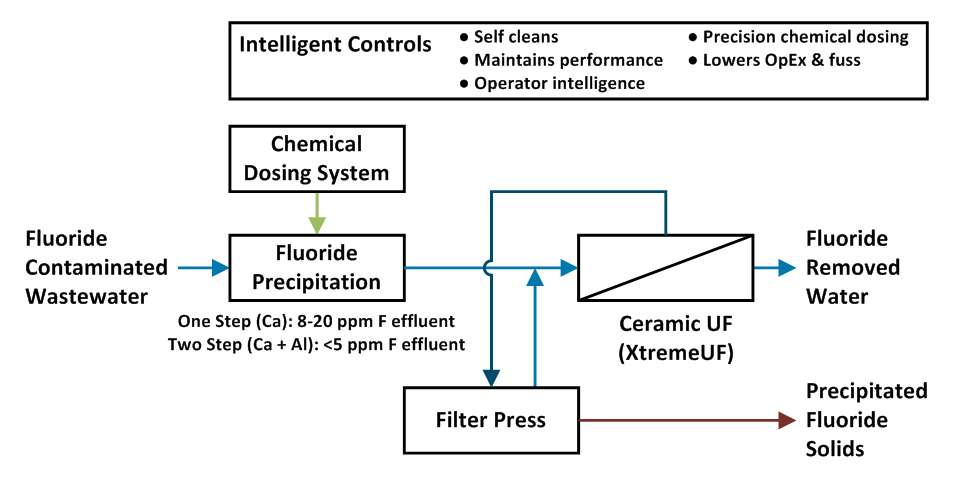
• A commonly practiced method through using lime (Ca(OH)2) and/or calcium chloride (CaCl2) to precipitate calcium fluoride
(CaF2) down to its solubility limit. This is followed by aluminum based coagulation to further reduce fluoride to meet low discharge limits. • Removes other contaminants such as acid, silica, and heavy metals (cadmium, copper, chromium, lead, mercury, and zinc). |
• Two separate reaction processes with long hydraulic retention times. • CaF2 and Al(OH)3 precipitates result in fine particles that take long times to settle, requiring large sedimentation and clarification tanks. • Overdosing of lime and coagulation agents, resulting in high chemical costs and excess wet sludge. |
| Adsorption & Ion-exchange |
• High availability of adsorbent options, such as activated alumina, modified activated carbon, hydroxyapatite, zeolites, char, and fluoride specific ion exchange resin. • Reduces fluoride to 1 mg/L. • Best fit for removal of low concentrations of fluoride. |
• Not cost-effective for industrial wastewater with high fluoride concentration due to high consumption of the adsorbent and/or high cost to regenerate ion exchange resins. • Operation pH limited between 5 and 8. Other anions (e.g., chloride, nitrate, sulfate) present in the wastewater reduces fluoride removal efficiencies. • An ion exchange regeneration wastewater brine requires management. |
| Reverse Osmosis & Electrodialysis |
• Reduce fluoride to 1 mg/L. • Remove other contaminants including total dissolved solids. • Minimal chemical consumption. • More compact footprint and greater automation over other options. • A good polishing method if required. |
• Membranes are not compatible with hydrofluoric acid or fluorosilicic acid in the wastewater. • Possible membrane fouling by other inorganics and organics in the wastewater. • Pretreatment often required. • A concentrated brine reject is produced requiring management. |
Saltworks Technologies is a leader in the development and delivery of solutions for industrial wastewater treatment and lithium refining. By working with customers to understand their unique challenges and focusing on continuous innovation, Saltworks’ solutions provide best-in-class performance and reliability. From its headquarters in Richmond, BC, Canada, Saltworks’ team designs, builds, and operates full-scale plants, and offers comprehensive onsite and offsite testing services with its fleet of mobile pilots.

This article introduces a new type of ceramic membrane system and explains how it opens the application range. An example of treatment of oil and grease in produced water is provided.

Heavy industry, manufacturing, and natural resource-based industries often use large volumes of water and generate wastewaters requiring treatment. Saltworks designs, builds, and operates advanced wastewater treatment plants that economically and reliably treat tough industrial wastewaters.
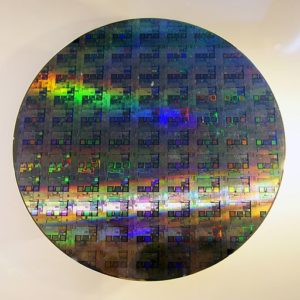
The manufacturing of microelectronics generates unique wastewaters. Saltworks can help you to manage wastewater flows from microelectronics production, targeting fluoride, ammonia, metals, and ions, reducing brine waste, and allowing water reuse.

Solar PVs manufacturing facilities produce industrial wastewater streams with complex chemistries, which must be managed for reuse, discharge, or disposal. Constituents of concern include fluoride, organics, metals, suspended solids, acids, alkalis, and others.